

The Hidden Profit Leak: How We Found What Three Previous Agencies Missed
Three ecommerce stores — a Korean cosmetics brand, a lens retailer, and a pet shop — all had the same invisible problem in their Google Shopping feed. ROAS was stuck. Revenue flat. Previous agencies ran more tests. We ran a feed audit. Four weeks later, all three stores saw revenue double.
Table of contents
Problem
Revenue stuck for 4 months. Every fix made it worse.
For four months, Nav ran the founder's playbook. Bid up the winners. Paused the losers. Tested Performance Max. Hired an agency. Each move bought a week of optimism and then made things worse. ROAS dropped from 5.1 to 2.9 in two weeks with no clear cause. He'd already fired one agency.
By every textbook metric the account looked clean. Conversion rate solid. AOV healthy. Campaign structure tight. Nothing in the ad platform itself looked broken.
"I'm starting to think the problem is me." — Nav Lalji, Founder, Lens2me
It wasn't him. We saw the same pattern in QKorean and Petsify — three different niches, three different ad accounts, three previous agencies who'd done exactly what you'd expect them to do. The actions were textbook. The symptom was identical. And the real problem was hiding in the same place every time — somewhere none of the campaigns could see it.
Quick facts:
- Vertical: E-commerce
- Channel: Google Shopping
- Stores affected: 3 (different niches — contact lenses, K-beauty, pet care)
- Common cause: Broken product feed
Strategy
We didn't touch the campaigns.
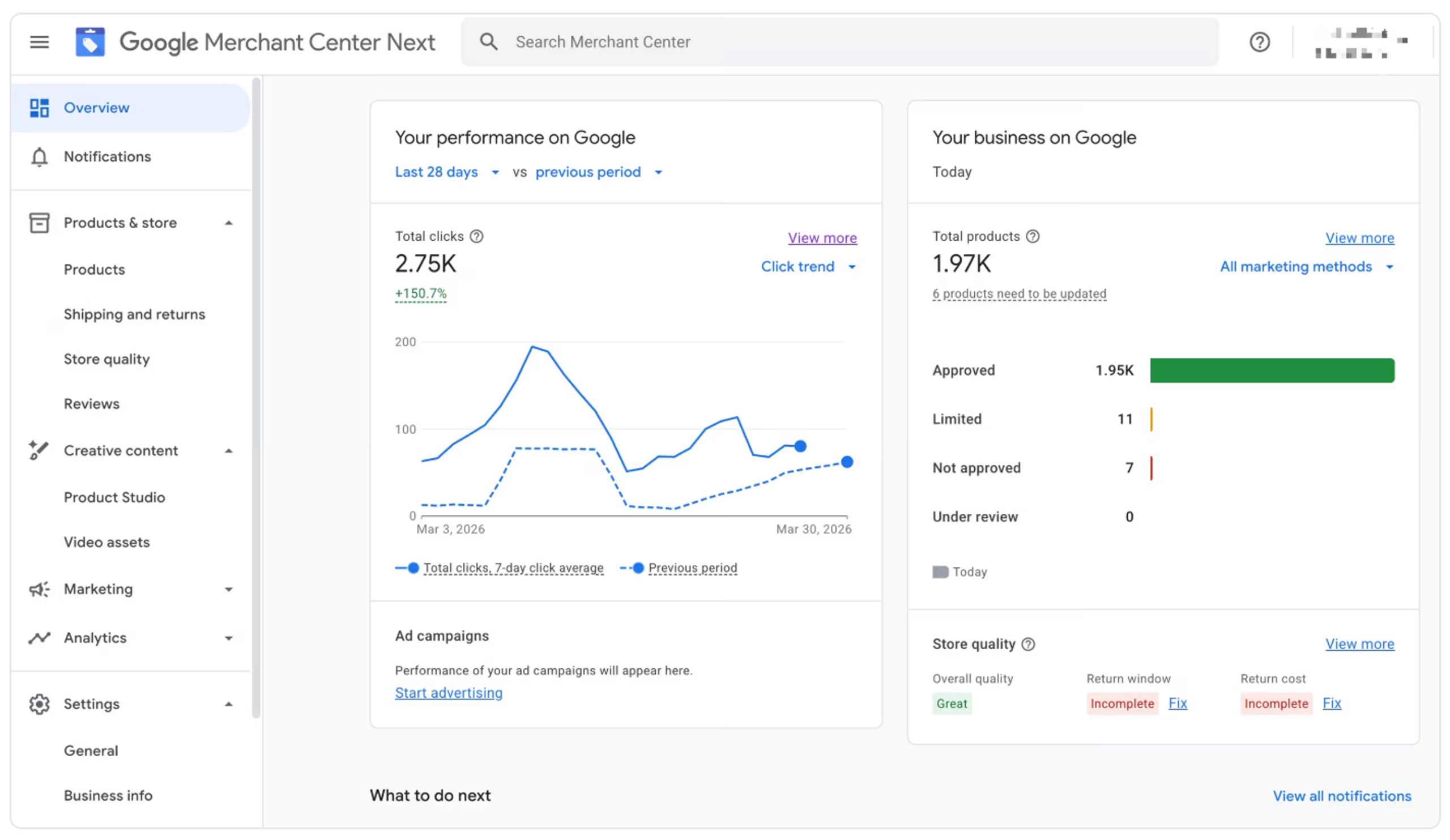
Most agencies in this situation rebuild campaigns, switch to Performance Max, or rework bids. We did the opposite — we ignored the campaigns entirely and pulled the product feed in Merchant Center. That's where the money was leaking. We found four problems, in different combinations, across all three stores.
1. Titles written for a warehouse, not a buyer
Buyers searched "Acuvue Oasys daily lenses UAE." The feed said "Daily Disposable 30 Pack." Google saw no match — and showed a competitor instead. We rewrote every title to match real search queries — including brand name, product type, and intent modifiers.
2. Critical product attributes missing
No product codes (GTIN, MPN). No categories. No condition field. No availability data. Google's silent response to incomplete listings: show them less. We filled every required attribute across the catalogue, including the optional ones that signal trust (brand, color, size, age group).
3. 23 out-of-stock products still running ads
QKorean had 23 products live in active campaigns that were already sold out. Click → dead page → Google logs the bad experience → quality penalty compounds. We set up daily auto-sync between the store inventory and the Merchant Center feed so out-of-stock items would automatically be pulled from ad rotation.
4. Feed banned in 3 Gulf markets
Lens2me's feed had been silently restricted in three Gulf markets for over six months. Budget was spending — just not where the buyers were. We cleared the regional restrictions in Merchant Center by resolving the underlying policy violations, restoring full geographic reach.
Results
Same budget. Same products. Same market.
Before
- Revenue plateaued for 4 months
- ROAS dropping with every "optimization" attempt
- Out-of-stock products still consuming budget
- Feed silently restricted in key regions
- Catalogue invisible to high-intent searches
After
- Lens2me: ROAS climbed from 4x to 10x
- QKorean: +30% traffic, +40% ROAS in 90 days
- Petsify: Revenue 2× (doubled), ROAS +50%
- All three feeds clean, regional restrictions cleared, out-of-stock products auto-pulled
Headline metrics
- Lens2me ROAS: 10x (up from 4x — same budget, same catalogue)
- Petsify revenue: 2× (with ROAS +50%)
- QKorean ROAS: +40% (with +30% traffic in 90 days)
Per-client breakdown
Lens2me (Contact lenses)
- Niche: Contact lenses, UAE market
- ROAS before: 4x
- ROAS after: 10x
- Key fix: Title rewrites for search-intent match + regional ban clearance
QKorean (K-Beauty)
- Niche: Korean cosmetics, online retail
- ROAS lift: +40%
- Traffic lift: +30% (90 days)
- Key fix: Out-of-stock products removed from active campaigns + attribute completion
Petsify (Pet care)
- Niche: Pet supplies, ecommerce
- Revenue lift: 2× (doubled)
- ROAS lift: +50%
- Key fix: Title rewrites + product codes added + out-of-stock auto-sync
For business owners: If your Google Shopping results are inconsistent and every "optimization" makes them worse — stop looking at your campaigns. Pull your feed. Bad titles, missing fields, dead SKUs, and silent regional bans cost more than any bid strategy can fix.
Client's Words
What they said after.


Great cooperation with UAWC - we saw clear improvements in both efficiency and results.
Read review on

Working with UAWC significantly improved our campaign performance. We achieved more stable sales and better control over our ad spend.
Read review onFAQ


